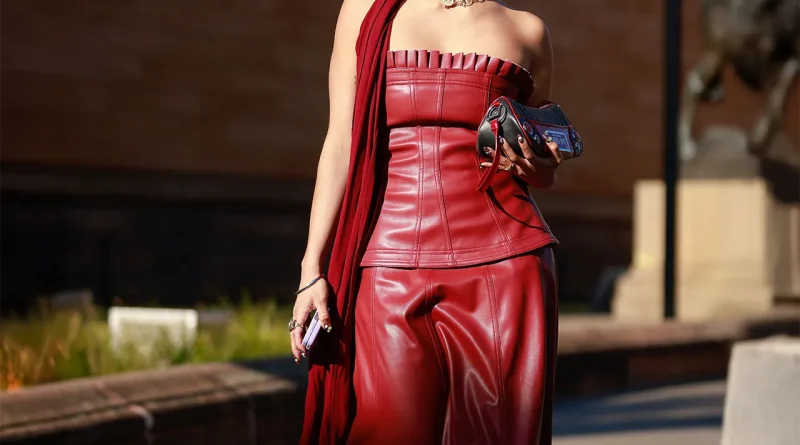
Fashion: The Art of Self-Expression and Cultural Identity
But fashion is more than just clothing. It’s also a powerful form of expression, a way to be creative and an identity in itself. From the catwalks of Paris high fashion or the street culture scenes in Tokyo cityscape, fashion – as a mirror for how people perceive themselves and the world around them. As a practical object, fashion has changed over time. Beginning in Paris but evolving to something that is now truly global Influencing art, Culture and lifestyle trends all around the world. Hence, today the fashion world is still renewing itself fusing tradition with technology and individuality aided by sustainability.
The Rise of Fashion
Fashion has a long streak of cultural development which can be traced back through the ages. Garments in ancient civilizations were a sign of status and social rank. They denoted class differences, with the Egyptians using fine linen for their clothes, Romans wearing togas as a badge of citizenship and Chinese robes made out of silk which also represented luxury or cultural heritage. In those early kinds of fashion, style was secondary to identity or role in life.
The modern fashion industry began to take shape in the 20th century. Designers such as Coco Chanel, Christian Dior and Yves Saint Laurent changed the way people dress by focusing on elegance and innovation. The rise of fashion magazines, photography and television has turned designers into celebrities; fashion is a culture accessible to the masses while it now extends far beyond France or even Europe.
Today, the fashion industry is more democratic than ever. Platforms like Instagram allow people to become influencers, independent designers and coop- eratives spring up for new fashions that challenge the norms–all over the world via social media. Instantly people can express their style, find inspiration globally and engage in an industry that once was reserved just for elite.
In Fashion* Consign
Fashion has a magic all of itself to help one express oneself, by personality 1. Without uttering a word, it is what you are saying.
The furniture or dressing clothes a person chooses are generally chosen by their mood, values and way of life. A smooth business suit exudes professionalism and confidence, yet exciting streetwear can often give out a vibe that speaks to creativity or rebellion. Fashion permits a person to tell everyone else both who they own to lift (how bright), taste is through the color, texture and line.
Fashion plays an important role in shaping identities and encouraging self. Concepts such as gender-neutral fashion, body positivity and adaptive clothing have turned the traditional norm on its head. Designers and brands feature those of every age in their campaigns or offer clothing for every size: diversity is increasingly the theme.
Fashion Tech and Creativity
In today’s digital age, fashion is unrecognizable from what it once was. Technology has brought 3 D printing, virtual fashion shows and AI design tools that can be taken in every direction. Virtual fitting rooms help customers see clothes before they buy via an app that uses augmented reality, making shopping more convenient yet friendly to the environment.
Online shopping has changed the way people buy clothes beyond recognition-no longer do they have to go to Italy for fashions; just log on and shop away! In the digital age, social media has taken over from fashion magazines as a model runway-anything can echo through space instantly; and who knows what will happen next? Plus that very concept of shopping too is being turned upside downN. O T to Generation x The metaverse and digital fashion have created a new arena for creativity. Here virtual clothing is not a business as usual but projecta to show boundary-breaking ideas (or where clothes as well as NFTS serve special symbols in online; communities+.
Eco-Fashion
Fashion’s key slogan is “Sustainability.” By supporting eco-friendly materials and production on the one hand, while thus creating living principles for all of us newcomers to try out ourselves recycling and taking care where we can (as part of living) rather than being a consumerist piggy; some brands are showing a determination not just look good but do right by our environment too.
As consumers become more aware of their choices, other things are starting to hit their radar that they might not otherwise have noticed. Shopping second-hand has become an increasingly popular way of buying, and this is where vintage clothing comes back into the frame; everyone’s doing it now. * Accept Corrected Version
Fashion Serves as a Bridge between East and West
Diversity of Expression in Fashion
“It’s not Chinese, and it’s not French. It is something in between, ” says Cuihuiwei, who is from Beijing, China and now attending school in Paris studying fashion design. She explains that the convergence of Western with Eastern sensibilities has led to a new look–one that combines artfulness (the skill of hiding seams) but also comfortable practical attire or clothes that won’t lose their shape!
Even if you don’t have access to a fabulous shopping district, there are plenty of wonderful window displays that will let you window shop from your armchair. Stores in Paris and Tokyo are especially prone to putting on wildly flamboyant shows for the Christmas holidays and many people now make pilgrimages every year just to watch these amazing productions alone!
The year 1984 was when French fashion came into its own and shook off the shackles of rigid conformity. That year, a number totally unexpected looks bumped suddenly for the first time into public view: bags characterized by Asian motifs; glasses with scenes of Paris on their lenses; skirts consisting entirely lining wool (where appropriate); material to cover oneself in completely so as create a comfortable position to sleep while standing up, etcetera etcetera ad infinitum.
Clothes are not a matter of life and death, she says.
The first time I met Dai Swen it was in Milan, when we were both spaced out on drugs. Later during an interview at his studio near Shanghai in May 2005, Dai tells me how he became involved in fashion: “When I shop at home, the women all come up to tell me patak slondama walika [Excuse me, can I help you?], even if you go to a big department store everyone says this kind of thing with no regard for its sincerity; and as soon
There is the fortune paid to hostess who can convince her girlfriends that every one of them should buy an outfit by her favorite designer, acquiescence that is expressed in cash by being responsible for the purchase.